Edge and Copilot
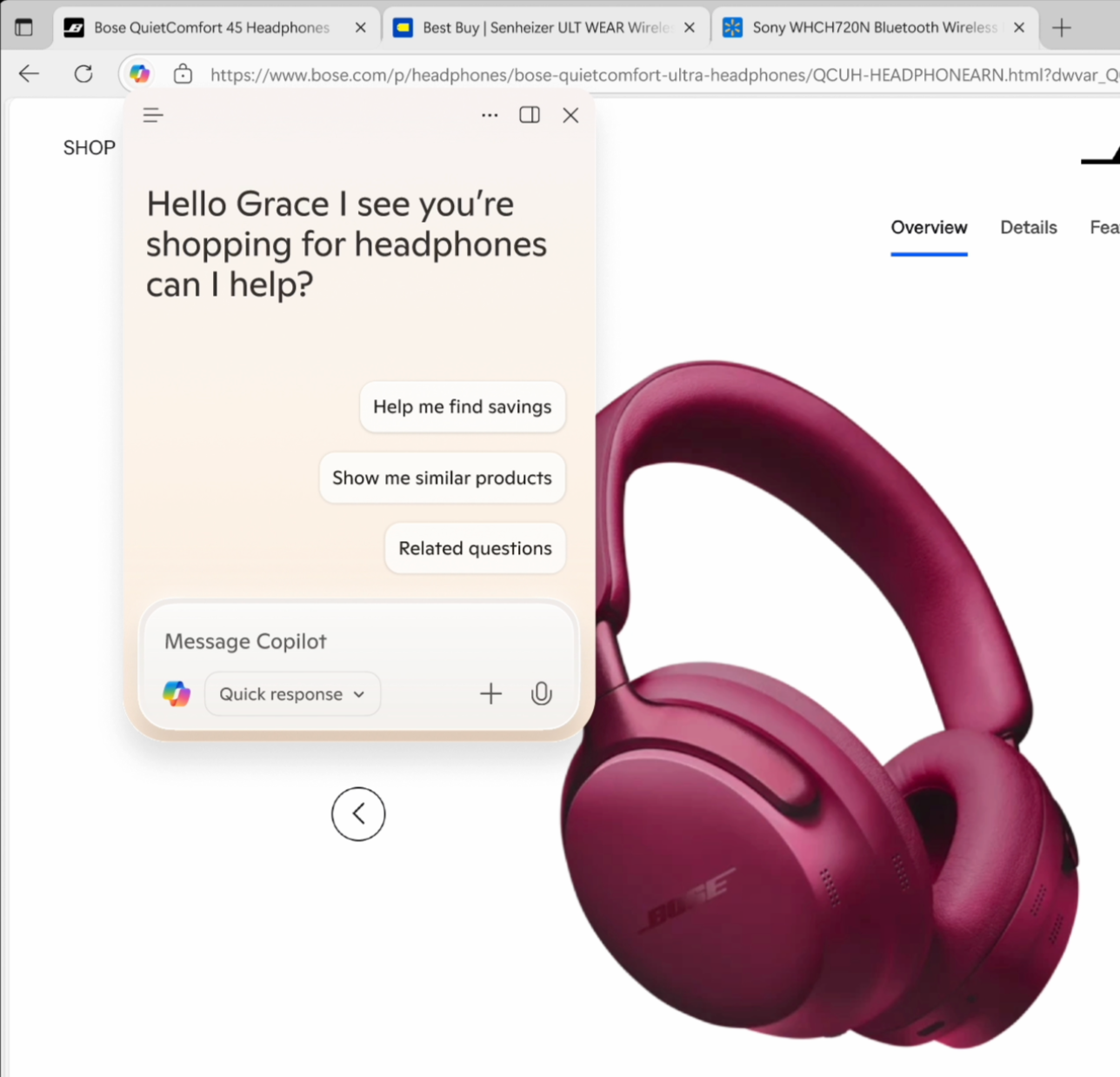
When Copilot first launched in Edge as a detachable toolbar sidebar, the challenge wasn’t just adding AI to the browser. The key was defining how it should behave there. How could it co-exist in the browser without interrupting flow.
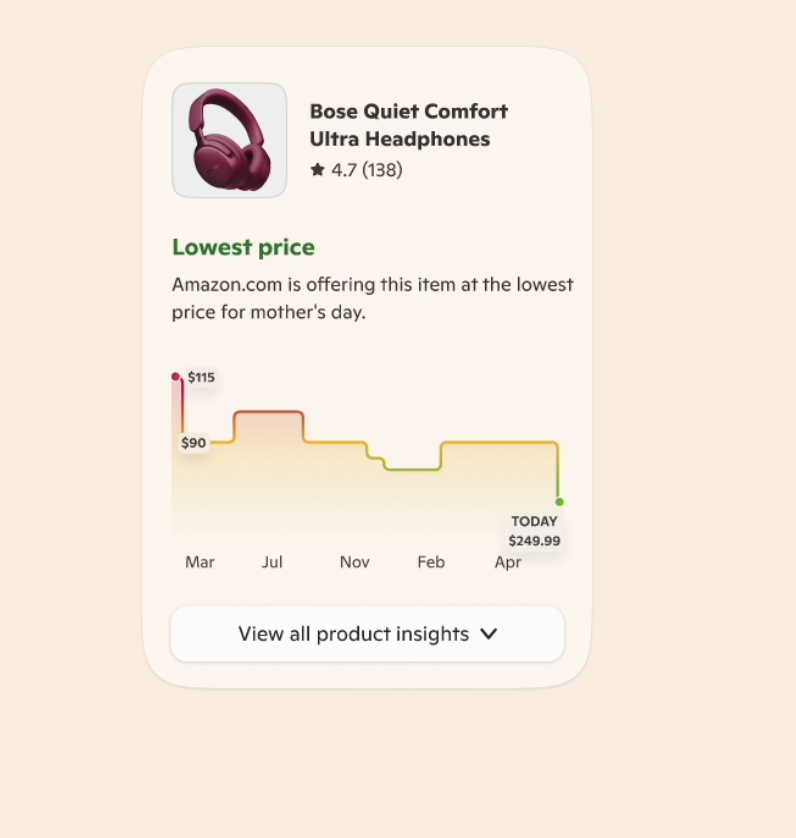
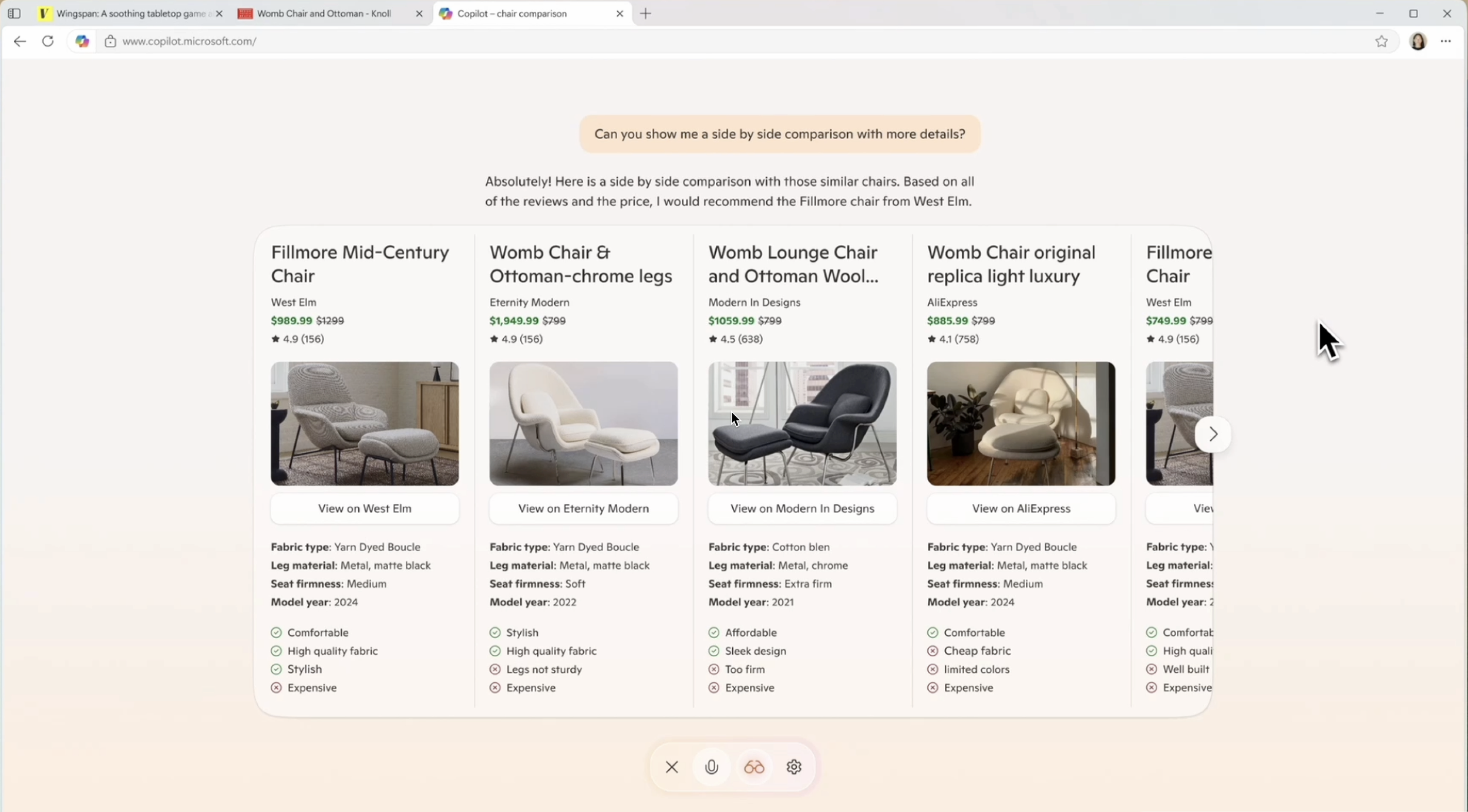
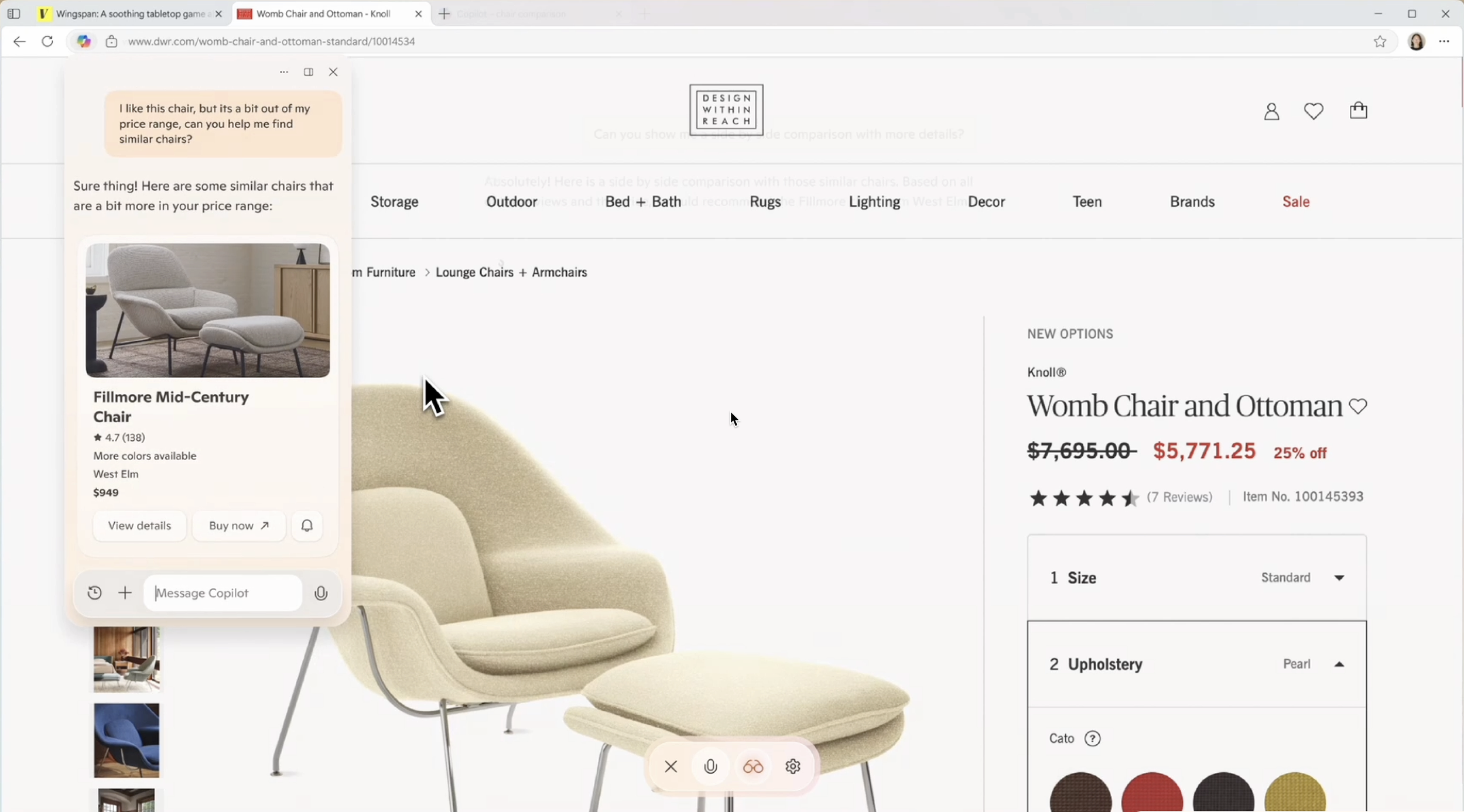
Through motion-driven prototypes and shopping scenarios, we redesigned the Edge sidebar as an ambient companion. This involved iterating on subtle transitions, elastic docking, and collapsible states that supported comparison and decision making. The result reframed Copilot from a bolted-on chatbot into a seamless, integrated layer within the Edge browser.
-
Dockable, detachable AI sidebar accessible from the toolbar
Context-aware assistance grounded in the active page
Structured outputs (summaries, pros/cons, comparisons)
Persistent yet collapsible workspace alongside browsing
Multi-turn refinement without leaving the page
-
User clicks Copilot in the toolbar to open the docked sidebar
Sidebar slides in without covering or interrupting page content
User asks a contextual question (e.g., about a product while shopping)
Copilot extracts visible details and generates structured insights (pros/cons, summaries, comparisons)
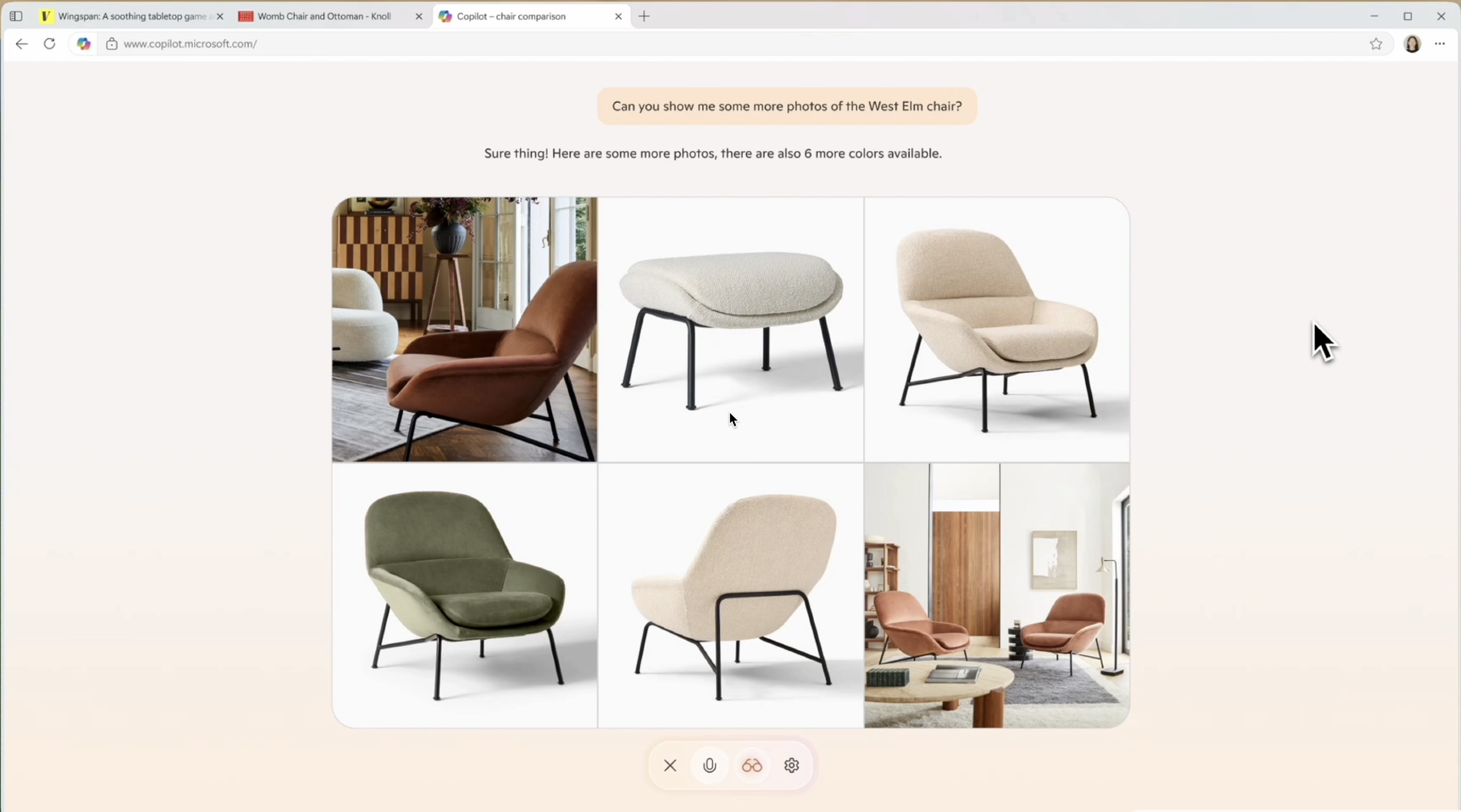
User refines the query in-place without leaving the page
Sidebar collapses smoothly, preserving browsing continuity
-
Clear user invocation (never automatic)
Visible boundaries between webpage and AI responses
Structured outputs to reduce cognitive overload
Human-in-the-loop refinement
AI as augmentation, not automation
My role and key decisions
This early work helped shift Copilot from a static utility pane into a more fluid, integrated browser companion, laying groundwork for the AI-enhanced browsing experiences that followed.
As a contributor, I made rapid motion experiments to define how Copilot’s sidebar should behave through prototyping shopping-centered scenarios, exploring dock and undock transitions, and testing how AI could feel truly embedded rather than appended to the browser. This was early pattern-breaking work, focused on moving beyond traditional sidebar utilities to establish new, AI-native interaction models before the browser became fully AI-integrated.
Impact & strategic contribution
This work accelerated early experimentation around AI and browser coexistence, helping shift Copilot from a static utility pane into a more adaptive workspace. Copilot needed to feel invited and not imposed.
By stress-testing information density, structured outputs, cross-scroll interactions, and multi-step decision support, we began redefining what browser UI patterns could look like in the AI era. The detachable pane phase marked a critical inflection point when browsers started evolving from passive content viewers into active cognitive partners.