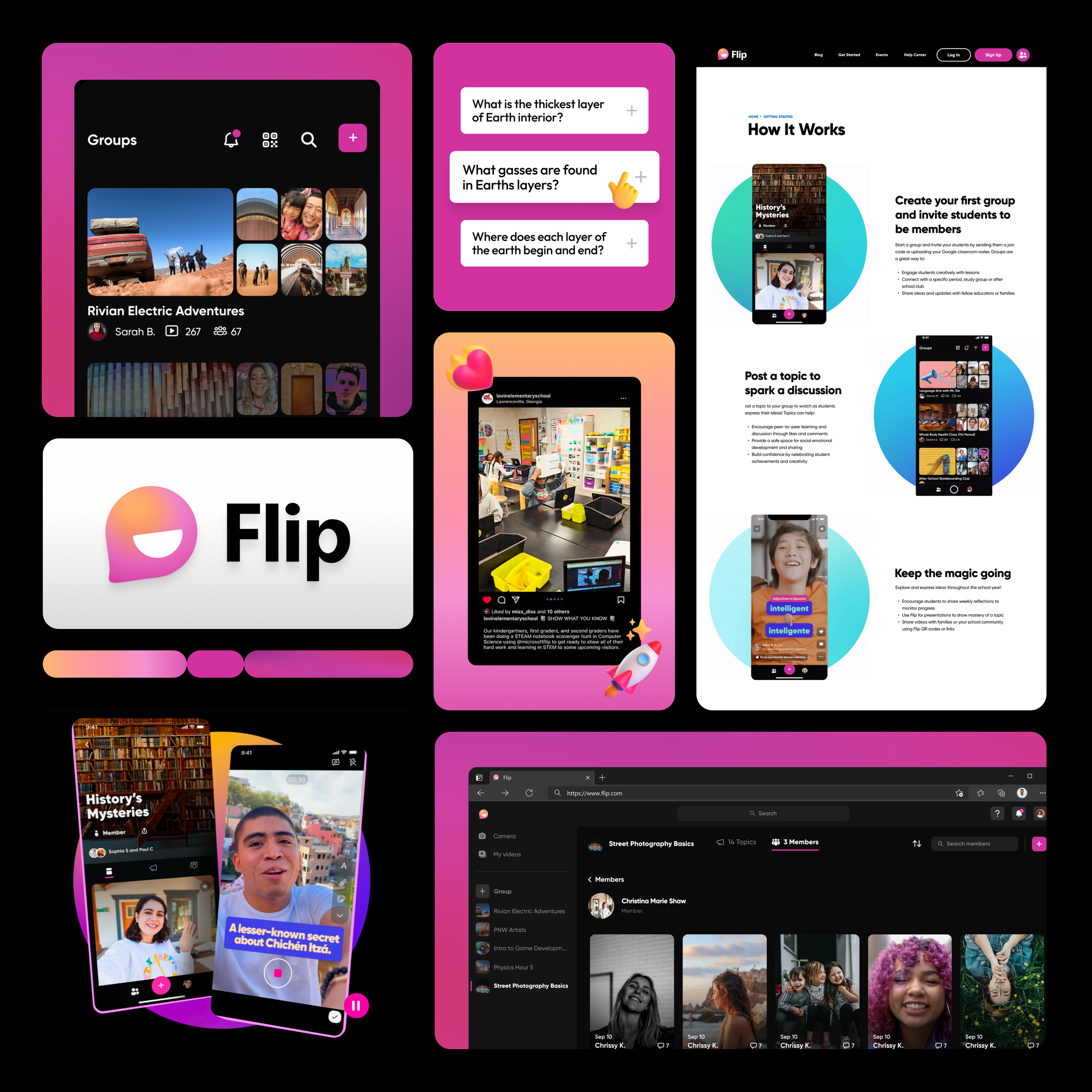
Flipgrid
An inclusive, reflective, and emotionally engaging learning app, without being performative. Flipgrid elevated short-form, asynchronous video as a core learning modality, making participation more human, flexible, and accessible. By combining low-friction video capture, playful expression, and strong safety controls, it created space for multilingual, neurodivergent, and reflective learners; especially when educators needed simple, low-burden ways to hear every student’s voice during COVID.
-
Asynchronous video responses to teacher prompts
Low-friction camera & recording flows across devices
Creative expression tools (effects, stickers, frames)
Accessibility-forward features (captions, pace control)
Teacher moderation & privacy control
-
Students respond to a prompt by recording short videos—on their own time, in their own voice—then view and reply to peers. The grid layout makes participation visible without ranking or pressure. Playful effects reduce self-consciousness, while accessibility features ensure students can engage at their own pace. For educators, setup is lightweight, moderation is intuitive, and insight comes from seeing understanding, not just reading it.
-
Expanded participation from students who rarely spoke in class
Improved engagement in remote, hybrid, and asynchronous learning
Strong adoption across K–12 and global classrooms
Established video as a legitimate learning primitive, not a novelty
Influenced later video-first collaboration patterns in education tools
My role and key decisions
Contributed to video creation & sharing flows, ensuring recording felt safe, fast, and forgiving
Designed flows for expressive layers in camera to lower emotional friction and encourage play
Helped define accessibility behaviors to reduce cognitive load)
Contributed to dark mode and design tokens, improving comfort and consistency across contexts
Partnered closely with real educators to balance creativity with classroom appropriateness and trust