Mixed realities
For Nerd Night at the Museum hosted by the Minneapolis Institute of Art, our team designed and built a mixed-reality installation in just two weeks for an audience largely unfamiliar with AR. Inspired by Machines of Loving Grace, we created a spatial, interactive world where poetry, art, and technology converged. The result was a working AR prototype built in Unity with 3D assets from Blender. I led spatial UX direction, shaped interaction flow, facilitated rapid prototyping, and ensured the experience felt intuitive and accessible under tight constraints.
-
Visitors moved physically through the museum to activate AR layers embedded in the environment.
Spatial cues and environmental context guided interaction instead of heavy UI controls.
Exploration relied on intuitive navigation, making discovery feel natural and immersive.
Early testing revealed hesitation points and how first-time users approached AR.
Observed moments of delight informed refinements to scale, pacing, and clarity.
The final beta balanced experimentation with accessibility for unfamiliar users.
-
Designed for first-time AR users, reducing intimidation through minimal interface complexity.
Used clear spatial cues to prevent confusion and accidental disorientation.
Avoided overstimulation by balancing visual intensity with environmental context.
Ensured guidance was available without forcing intrusive instructions.
Considered physical fatigue and device ergonomics during prolonged use.
Prioritized emotional comfort, allowing users to explore at their own pace.
-
Delivered a functional AR beta within two weeks
Successfully deployed during a live public event
Demonstrated effective cross-disciplinary collaboration under tight constraints
Gained actionable insight into onboarding users new to mixed reality
Established a rapid iteration model for future immersive work
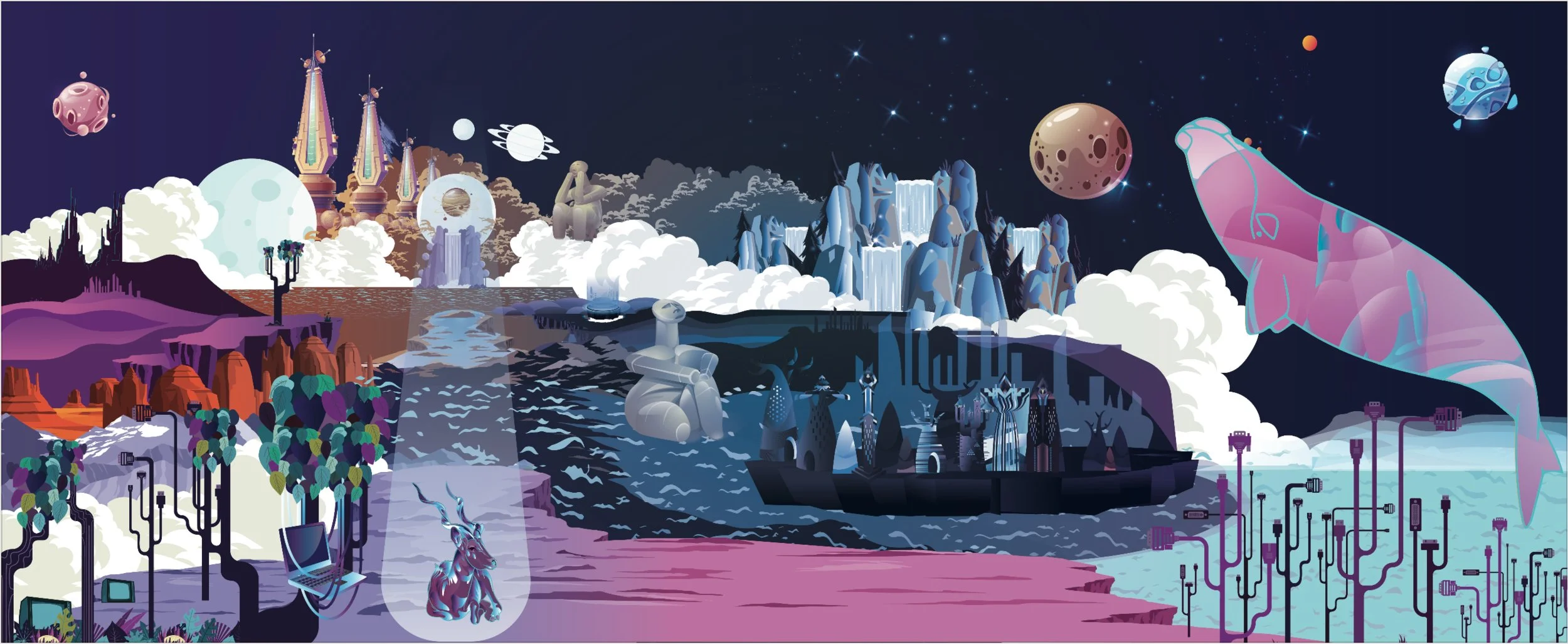
The nexus
What if you could step through a portal and wander through a poem inhabiting a world where technology and nature coexist?
My role and key decisions
I shaped the spatial UX strategy, framing physical movement as the primary interface rather than relying on traditional controls. I guided interaction flow, translated poetic concepts into tangible design decisions, and facilitated rapid ideation and prototyping sessions. I pushed for early user observation despite tight timelines and continuously aligned creative ambition with technical constraints to deliver a cohesive, usable experience.
Growth and responsible design
This project strengthened my understanding of designing for mixed reality, where physical space, story, and digital interaction meet. In future iterations, I would expand accessibility, support shared multi-user moments, and create clearer onboarding. With AI tools, I’d deepen visual richness while maintaining clarity. The experience reinforced that immersive tech works best when it centers the body, emotion, and ease of use.